
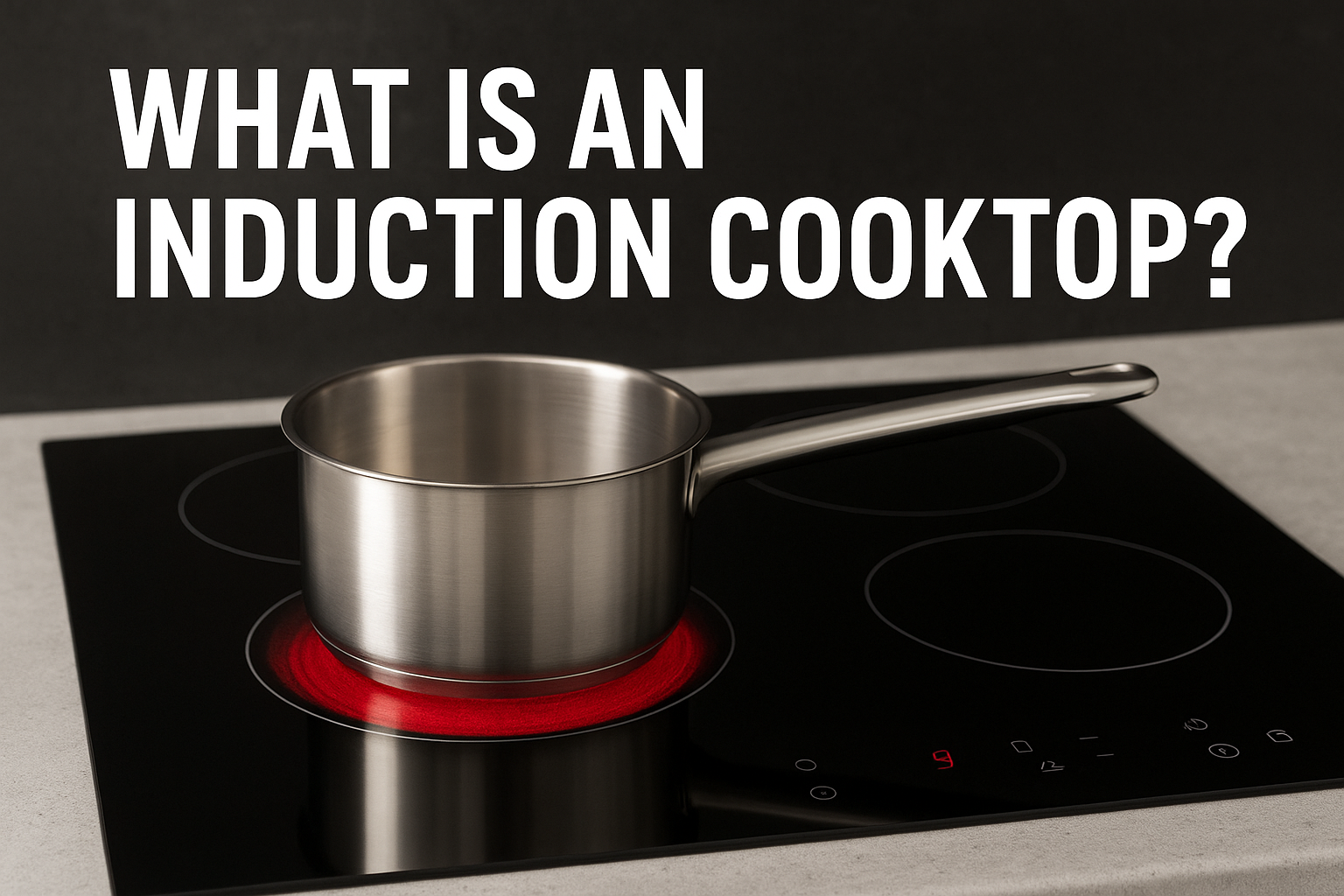
If you’ve ever wondered, “What is an induction cooktop?”, you’re not alone. This modern cooking technology has rapidly become a favorite for homeowners, chefs, and anyone who wants fast, efficient, and safe cooking. Unlike gas or electric stoves, induction works through electromagnetic energy that heats cookware directly — transforming the way heat is delivered in the kitchen.
In this guide, you’ll learn exactly how induction cooking works, why it’s so popular, what its advantages and drawbacks are, and whether it’s the right choice for your kitchen. Everything is formatted cleanly for easy WordPress publishing.
How Does an Induction Cooktop Work?
Induction cooking uses magnetic fields to heat pots and pans. Here’s what happens:
-
Copper coils under the glass surface create a magnetic field.
-
When magnetic cookware is placed on the burner, the field generates heat inside the pan.
-
The cooktop surface remains relatively cool, making it safer and more efficient.
This method avoids wasted heat and provides a high level of precision.
Benefits of Using an Induction Cooktop
1. Faster Cooking
Induction is significantly faster than both gas and electric because heat goes straight into the cookware.
2. Instant Temperature Control
Adjusting heat is nearly instantaneous, offering perfect control for simmering, frying, or searing.
3. Higher Energy Efficiency
Induction transfers heat with minimal loss, making it one of the most efficient cooking methods.
4. Enhanced Safety
No flames. Minimal heat on the surface. Automatic shut-off when no pan is detected.
5. Easy to Clean
The smooth surface wipes clean easily because spills don’t burn onto the glass.
Drawbacks of Induction Cooktops
1. Requires Compatible Cookware
Cookware must contain magnetic material. If a magnet sticks, it’s compatible.
2. Higher Upfront Cost
Induction cooktops tend to cost more than electric or gas models.
3. Possible Operational Noise
Some units create a light humming noise at higher power.
4. Electrical Requirements
Some homes may need a dedicated circuit or upgraded wiring.
Induction vs. Gas vs. Electric
Speed
-
Induction: Fastest
-
Gas: Quick
-
Electric: Slowest
Precision
-
Induction: Excellent
-
Gas: Very good
-
Electric: Fair
Safety
-
Induction: Safest
-
Electric: Safe
-
Gas: Open flame risk
Energy Efficiency
-
Induction: Most efficient
-
Electric: Moderate
-
Gas: Least efficient
Who Should Consider an Induction Cooktop?
Induction is an excellent choice if you want:
-
Faster meal preparation
-
A safer kitchen environment
-
Lower energy consumption
-
A sleek, modern kitchen design
-
Precise temperature control
Especially suitable for families, apartments, and anyone who cooks frequently.
Tips for Choosing the Right Induction Cooktop
1. Number of Burners
Choose based on kitchen size and cooking habits (1–6 burners).
2. Power Settings
Look for multiple levels for simmering, boiling, searing, and more.
3. Safety Features
Key features include auto shut-off, child lock, and overheat protection.
4. Noise Levels
Premium units generally operate more quietly.
5. Built-in vs. Portable
-
Portable: Best for small kitchens, RVs, dorms.
-
Built-in: Best for permanent, high-performance setups.
Maintenance Tips
-
Clean the surface daily with a soft cloth.
-
Avoid dragging pans to prevent scratches.
-
Use flat-bottom cookware for best results.
-
Ensure proper electrical installation.
Myths About Induction Cooktops
Induction is dangerous
False — it’s one of the safest cooking technologies available.
You need luxury cookware
You only need magnetic cookware, not expensive cookware.
Induction cooktops break easily
High-quality models are durable and long lasting.
They’re hard to use
Most people adjust quickly to the controls and precision.
Frequently Asked Questions (FAQ)
1. What is an induction cooktop in simple words?
It’s a cooking surface that heats pots and pans using magnetic energy instead of flames or traditional electric coils.
2. Does the cooktop surface get hot?
It warms slightly from the pan but doesn’t generate heat on its own.
3. What cookware is compatible?
Cast iron, carbon steel, and most stainless steel pans that attract magnets.
4. Does induction cooking use a lot of electricity?
It uses less electricity than traditional electric cooktops because it’s more efficient.
5. Is induction safe for pacemakers?
Keep a safe distance (usually 1–2 feet) and consult your doctor for personalized advice.
6. Is induction worth it?
Yes — if you value speed, precision, and safety, it’s a great upgrade.
7. How long do induction cooktops last?
Typically 10–15 years with proper maintenance.