
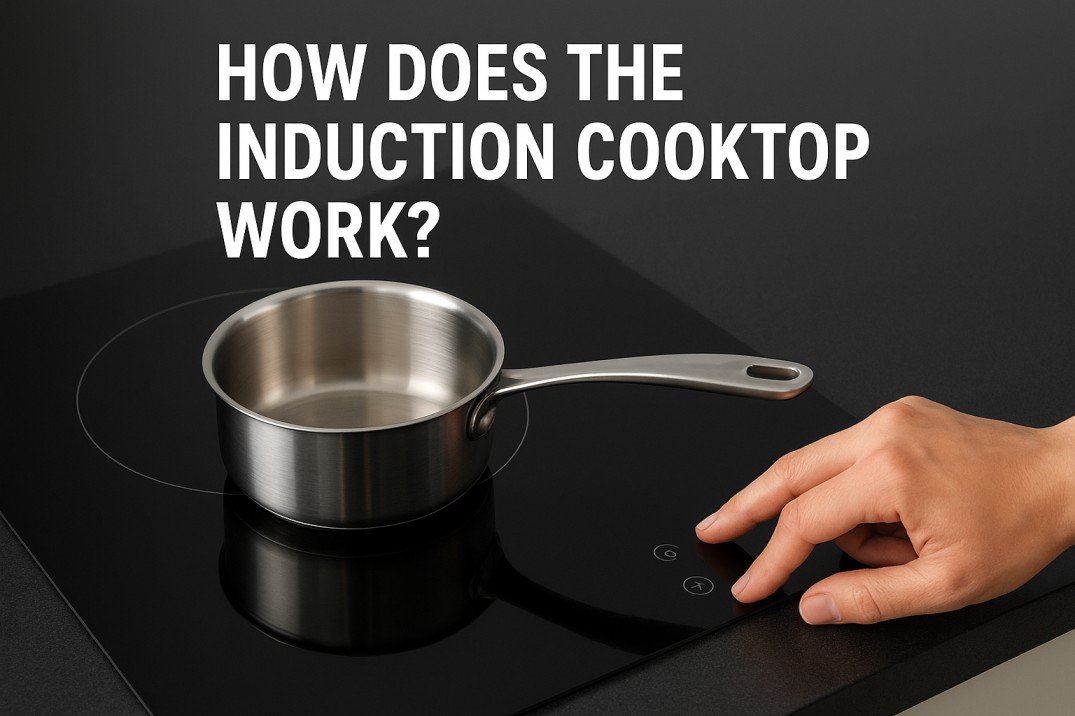
The question “How does the induction cooktop work?” has become increasingly common as more homeowners switch to modern, energy-efficient cooking appliances. Induction cooktops look sleek, heat incredibly fast, and offer precision that gas and electric stoves often struggle to match. Yet despite their popularity, many people still don’t fully understand what makes induction technology so unique and why it behaves differently from traditional cooking methods.
Induction cooking eliminates open flames and glowing electric coils. There’s no visible heat source—yet pots get hot almost instantly. Food cooks faster. Surfaces stay cooler. Energy waste drops dramatically. This combination of safety, speed, and efficiency has transformed the idea of what a cooktop can do.
In this detailed guide, we’ll break down exactly how induction cooktops function, what technology powers them, the benefits and drawbacks, and whether induction is the right choice for your home. We’ll also cover maintenance tips, buying considerations, and a helpful FAQ section at the end.
What Exactly Is Induction Cooking?
Induction cooking uses electromagnetic energy to heat pots and pans directly. Traditional cooking methods rely on conduction or convection:
-
Gas: heats cookware through flames
-
Electric: heats cookware through hot coils or radiant heat
-
Induction: heats cookware using a magnetic field
Rather than heating the surface and then transferring that heat to the pot, induction cooktops skip the middle step. The pan itself becomes the heat source.
This is why induction feels almost instant—there’s no waiting for a burner to warm up.
How Does the Induction Cooktop Work? (Step-by-Step Breakdown)
Here’s the simple version and the technical version. Both help you fully understand the process.
1. The Cooktop Creates a Magnetic Field
Under each cooking zone is a tightly wound copper coil. When you turn on the cooktop, electric current flows through the coil, creating a high-frequency magnetic field.
This magnetic field:
-
passes through the glass surface
-
reaches the bottom of the cookware
-
but does NOT heat the glass itself
The cooktop stays relatively cool because only the cookware interacts with the magnetic energy.
2. Magnetic Cookware Converts Energy Into Heat
Induction requires ferromagnetic cookware, meaning pots must contain iron or magnetic stainless steel. When magnetic cookware touches the cooktop, the magnetic field induces eddy currents inside the metal.
These currents cause resistance inside the metal, which produces heat.
Heat is generated from within the pan, not beneath it.
3. The Pan Heats the Food
As the cookware heats up internally, the heat transfers to the food or liquid inside. Because the energy transfer is direct, efficiency is significantly improved.
There is no:
-
wasted heat around the pan
-
flame escaping to the side
-
long heat-up time
This direct transfer is why water boils in half the time on induction compared to gas.
4. Induction Automatically Responds to Adjustments
One of induction’s biggest strengths is its responsiveness. When you adjust temperature settings:
-
the electromagnetic field changes instantly
-
the strength of eddy currents changes
-
the pan temperature adjusts almost immediately
This allows for precise control, even at delicate temperatures—for melting chocolate, simmering sauces, or slow cooking.
Why Induction Cooking Is So Efficient
Because the heat is created directly inside the cookware, induction wastes very little energy.
Comparison of energy transfer efficiency:
-
Induction: 85–90%
-
Electric radiant: 60–70%
-
Gas: 35–55%
Gas loses heat into the air around the pot, and electric coils must heat up themselves before transferring heat. Induction bypasses both steps.
Advantages of Using an Induction Cooktop
1. Much Faster Cooking Times
Induction can boil a pot of water nearly twice as fast as gas. Professional chefs value its speed for busy kitchens.
2. Instant and Precise Temperature Control
With gas, flames take a moment to reduce heat. With electric, coils take even longer.
Induction responds almost instantly—similar to adjusting a digital dial on an appliance.
3. Safer Than Gas and Electric
Induction cooktops are a safer choice for families and shared living spaces because:
-
the surface stays cooler
-
no flame is present
-
the cooktop shuts off automatically if no pan is detected
-
reduced burn risks
Some models also include child locks and pan size detection.
4. Easier to Clean
The surface doesn’t get hot enough for food spills to burn on. A quick wipe is usually enough.
5. More Comfortable for the Kitchen Environment
Induction doesn’t heat the air around the cookware. Less heat means:
-
cooler kitchens
-
reduced AC usage
-
improved comfort during long cooking sessions
6. Sleek, Modern Appearance
The flat glass-ceramic surface integrates seamlessly with contemporary kitchen designs.
Downsides of Induction Cooktops
Though highly efficient, induction has some drawbacks to consider.
1. Cookware Compatibility
Only magnetic cookware works.
To test: If a magnet sticks to the bottom, it works on induction.
Compatible materials include:
-
cast iron
-
magnetic stainless steel
-
carbon steel
Not compatible:
-
aluminum (unless magnetized base)
-
copper (unless magnetized base)
-
glass
-
ceramic
2. Higher Upfront Cost
Induction cooktops tend to cost more than standard electric or gas models.
3. Possible Electrical Installation Needs
Some homes may need:
-
a dedicated circuit
-
panel upgrades
-
professional wiring installation
Portable induction units don’t require these changes.
4. Potential for Light Humming Sounds
The magnetic field interacting with the pan sometimes produces a faint buzzing—usually at higher settings.
Induction vs. Gas vs. Electric: A Clear Comparison
| Feature | Induction | Gas | Electric |
|---|---|---|---|
| Speed | Fastest | Fast | Slow |
| Safety | Safest | Least safe | Moderate |
| Energy Efficiency | Highest | Lowest | Medium |
| Temperature Control | Instant, precise | Good | Slow |
| Cookware Compatibility | Requires magnetic pans | Universal | Universal |
| Cleaning | Easiest | Hard (grates) | Moderate |
| Kitchen Heat | Minimal | High | Medium |
| Upfront Cost | Highest | Medium | Medium–High |
Who Should Choose an Induction Cooktop?
Induction is ideal if you value:
-
speed and convenience
-
energy savings
-
safety for kids or elderly
-
modern aesthetics
-
precise cooking control
It’s especially good for:
-
busy households
-
apartments with limited ventilation
-
open-concept kitchens
-
people who want low maintenance appliances
-
anyone upgrading to a modern kitchen design
How to Choose the Right Induction Cooktop
1. Evaluate the Number of Burners
Options range from single-portable units to 4–6 burner built-ins.
2. Check Wattage and Power Levels
Higher wattage provides faster heating and better searing.
3. Look for Smart Features
Common features include:
-
automatic pot detection
-
residual heat indicator
-
child lock
-
bridging elements for large pans
-
timers and presets
4. Consider Noise Levels
Higher-end brands often operate more quietly.
5. Review Brand Reliability
Good warranties and strong customer service matter.
Maintenance Tips for Induction Cooktops
1. Clean After Each Use
Use a soft cloth and gentle cleaner.
2. Avoid Abrasive Pads
These can scratch the glass surface.
3. Lift Cookware Instead of Sliding
Prevents surface damage.
4. Use the Right Cookware
Flat-bottom pans ensure proper heating and reduce noise.
5. Watch for Residue
Sugar spills can damage the glass if not cleaned promptly.
Common Myths About Induction Cooktops
Myth 1: Induction Is Dangerous
False. It is one of the safest cooking technologies available.
Myth 2: Induction Cooktops Break Easily
High-quality units last 10–15 years and often longer.
Myth 3: They Require Expensive Cookware
Only magnetic cookware is needed—not necessarily high-end brands.
Myth 4: Induction Is Too Complicated
Most users find it easier than gas or electric after a short adjustment period.
FAQ: How Does the Induction Cooktop Work?
1. How does the induction cooktop work in simple terms?
It uses magnetic energy to heat the cookware directly. The pan becomes the heat source.
2. Does the cooktop get hot?
The surface stays relatively cool, only warming slightly from the pan.
3. What type of pots and pans work?
Any cookware that attracts a magnet: cast iron, magnetic stainless steel, carbon steel.
4. Is induction cooking safe for children?
Yes. The lack of open flame and cool surface make it very child-friendly.
5. Why does my induction cooktop make a buzzing noise?
It’s the vibration of the cookware from the magnetic field—common at high power.
6. Can I use aluminum or copper cookware?
Only if they have magnetic bases designed specifically for induction.
7. Do induction cooktops use more electricity?
No—they use less electricity overall due to higher efficiency.
8. Are induction cooktops expensive to repair?
Repairs can be pricier than gas or electric models, but failures are uncommon.
9. Does induction cooking affect pacemakers?
Users with pacemakers should maintain a safe distance (generally 1–2 feet) and consult their doctor.
10. Is induction worth it?
For most people, yes. It combines safety, speed, efficiency, and modern usability.